



E-Information


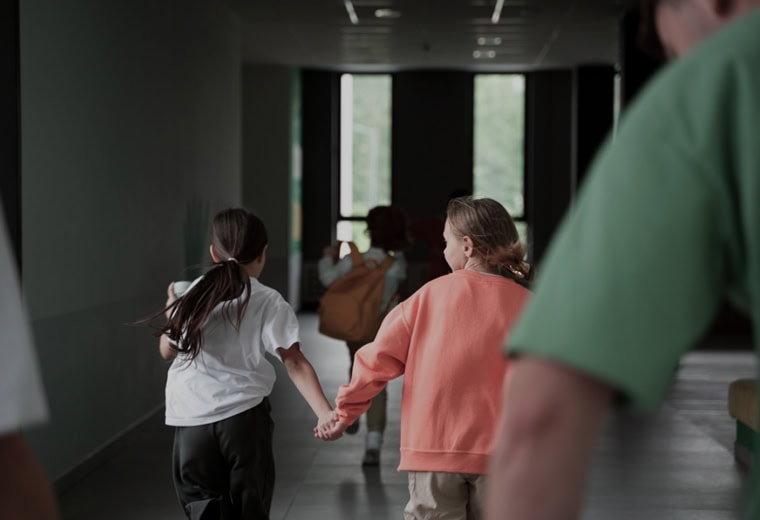
School Adjustment: A Gentle Transition to Routines
In the early years of my teaching career, summer had ended and school began with a Monday ceremony. I entered the classroom together with the students. One of the students had already opened the textbook and was waiting. My eyes caught the large heading on the open page of the book; it read, “THE HOLIDAY IS OVER.” Even for me, someone who loves their job, this heading was discouraging. Holidays are enjoyable and cheerful; there is no rushed daily schedule, no homework, no early mornings. Many family rules, in other words restrictions, are relaxed during holidays, and the time allocated to play is quite extensive. In short, holidays are the best time to rest, not only for children but also for us adults. The cycle of school starting and holidays ending needs to be well planned by us educators. Knowing that students’ biological clocks change during holidays, their emotional states differ, they stay away from academic content, and their focus shifts, we need to plan the start of school accordingly. Just as athletes in sports teams are not subjected to sudden intense training when they come together after a break, we educators should also plan the first weeks of school by avoiding sudden academic overload. Establishing routines takes time, and the first month of school, the September transition period, is extremely valuable for students to adapt to these routines.
Teachers who are instructional designers know that learning is as unique as a fingerprint, and with the same understanding, it is a fact that each student’s adjustment process to school may be different. Especially for students transitioning to a new level, such as starting primary school, middle school, or high school, this new journey represents a significant unknown. In this uncertainty, the first need of every student is “security.” It is the strong relationship they will build with a supportive adult they can turn to when explain. More than academic priorities, students need to feel safe in these environments they leave their most secure place, their homes, to attend. Another important challenge arises in classes where the teacher changes due to level transitions or relocation. The seeds of a strong bond to be built with the teacher they will spend the year with are planted in the very first days of school. Another point to consider in the school adjustment process, after establishing positive teacher-student relationships, is encountering new subjects for the first time. Although a student starting high school may have encountered different areas within Science courses before, they will directly face Chemistry, Physics, and Biology as separate subjects in high school. These first encounters are important. The first condition for a student to be successful in newly encountered subjects is liking the subject. For example, quickly diving into academic content in Chemistry due to concerns about covering the curriculum and continuing this pace throughout the year often results in some students trying to cope without genuine interest. The reality is that students are more successful in subjects they enjoy and feel confident saying, “I can do this.”
Alongside the responsibilities of teachers when school starts, the steps taken by the guidance counseling services also play an important facilitating role in students’ adjustment to school. Even brief one-on-one meetings between guidance counselors and students they will work with, observing them especially during the first week of school, are very important in understanding the emotional changes students bring back from the holidays and identifying their needs. In schools with a large number of students, collecting data through a form sent to parents before school starts can be helpful. Asking how the student’s summer holiday went and whether there were any changes in the family that the school should be aware of (such as loss, illness, separation, etc.) can be functional for preventive guidance.
While one step of the school adjustment process belongs to school professionals, another equally important part is the attitude of families. I vividly remember from my own student years how my father would list negative statements starting with, “You’ll see when school starts!” Families need to be mindful of the phrases they use as the end of the holiday approaches. Statements like “Just wait until school starts, you won’t see that tablet, phone, or TV,” or “Go ahead and play as much as you want now, you’ll see once school starts,” do nothing but portray school as a prison. We all know that during holidays, bedtime shifts later due to longer daylight hours. “You don’t know how to go to bed at night, and you don’t know how to wake up in the morning,” is a typical summer holiday phrase. Let’s consider this example and look at preparing for the start of school. A parent addresses a child who goes to bed late and wakes up late, saying, “School starts next week, keep going to bed late and then don’t blame me later when you struggle to wake up…” In this example, there is nothing supportive or beneficial for the child, only threats in the air. What do we expect from families? Perhaps not at bedtime, but at a dinner table, asking a question like, “School starts in two weeks, how would you like to prepare for this process?” This might prompt a thought such as, “Ours wouldn’t say anything, just shrug it off.” That may be true, but let us not forget that we are the adults here. We need to prepare for the school process together with our children. Saying “Go to bed, your school is starting” while we ourselves watch a movie on TV is not fair. Supporting our child by accompanying them with statements like, “Your school is starting and a challenging time is beginning for me at work too, let’s go to our rooms a bit earlier, we can read books,” can be meaningful.
When school starts, especially anxious parents may begin to bombard their children with questions when they come home: How was your first day? Who did you meet? What classes did you have? Which teacher did you like? What did you eat for lunch? Although parents may think these questions show interest, they can turn into a burden for the child. Especially in the first days of school, parental accompaniment is important for adjustment, but the measure of this accompaniment should be to follow the child’s lead. Listening attentively when they choose to share, and asking questions only if there is genuine curiosity about what they have said. Another aspect of the adjustment process involves two extremes: organizing the student’s bag and school clothes. Some families step aside saying, “This is your responsibility,” while others do everything for the child, including packing the bag. Providing gradual support according to the child’s needs during the school preparation process is more effective.
It should not be forgotten that anxiety is contagious. Families should trust the schools they send their children to and the teachers working in those schools. The more at ease parents feel, the more smoothly children will navigate this process.
In a child’s growth journey, some of the most valuable learning occurs through peer interactions. In this respect, schools, as in the past, remain a priority today, especially for emotional development. The school adjustment process is the first step of this important component. Schools where children do not walk reluctantly are possible, as long as we educators and families focus on the joyful parts of the process and accompany them together.











 Corporate
 Our History
 Message from Our Board of Directors
 Message from Our Executive Board
 Management
 Becoming a Member of İTK Family
 İTK Values
 Accreditations
 Our Policies
 İTK Alumni Association
 Sustainability
 İTK Corporate Identity
 Career at İTK
 Schools
 Primary School
 Middle School
 High School
 Campuses
 Academic
 Foreign Languages Education
 Technology
 PDC
PDC Traditional İTK Activities
 Success
 İTK SSAC Academy
 Life at İTK
 Sports, Culture and Arts Centers
 Clubs
Clubs İTK School Parents Association
 İTK Student Association
 İTK Sports Club
 İTKStore
 İTK Podcast
 Registration
 New Semester Registration
 Required Documents
 Online Registration
 Individual Admission Exam
 ADS
ADS Medya
Medya News and Annoncements
 Events
 Corporate Publications
 Blog
Blog Contact