



E-Information



As we step into a new year, we all set goals for the future. Alongside health, happiness, and success, there is another equally important topic that is often overlooked: financial awareness.
When finance is mentioned, complex charts, stock market indices, or difficult mathematical formulas usually come to mind. Yet in the modern world, financial literacy is less a technical expertise and more a fundamental life skill that enables individuals to build their freedom and their future.
For children, financial literacy means learning the foundations of building a healthy relationship with money, practicing patience, sharing, and making conscious choices; for adults, it is the ability to manage income effectively, plan for the future, and remain resilient in the face of uncertainty. What is common at every age is the ability to manage money according to life’s needs, without allowing money to control life.
Being financially literate is not only about saving money. It means understanding the time value of money, filtering spending habits through conscious awareness, managing risks, and knowing how to ask the right questions when needed. So, where should we begin this journey?
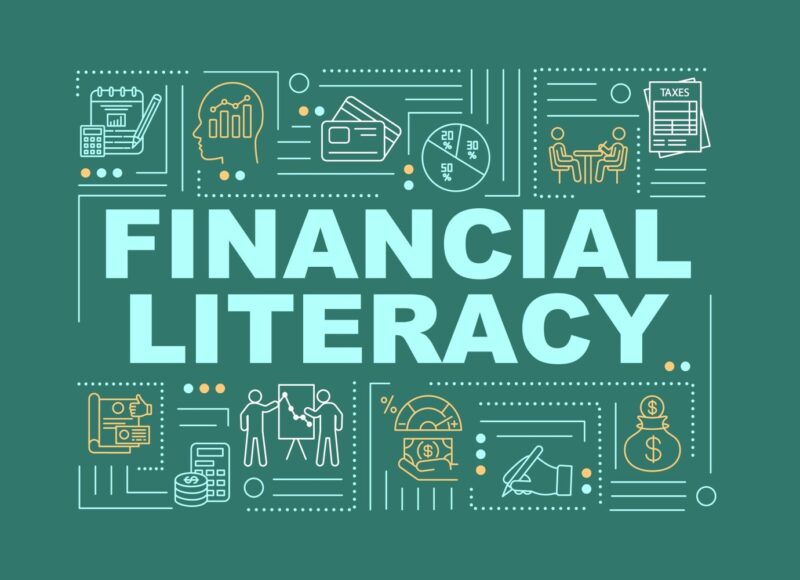
1. Budgeting: Your Financial Navigation Tool
If you want to know where you are going, you must first see where you stand. Listing your monthly income and expenses item by item makes unnoticed spending visible. A good budget plan is not a restricting chain; it is a map that helps you direct your money toward what you value most.
2. Distinguishing Wants from Needs
One of the biggest traps of a consumer society is making momentary desires feel like urgent needs. Before making a purchase decision, asking ourselves the following question creates a powerful difference:
“Is this truly a need, or is it filling an emotional gap in the moment?”
3. The Power of Compound Returns
Compound returns, described by Albert Einstein as “the eighth wonder of the world,” show how small savings can turn into significant value over time. What matters is not how much you earn, but how much of what you earn you can sustainably grow. Small steps taken at an early age become the strongest assurance for the years ahead.
4. Protection Against Inflation
In an economic environment where money loses value when left idle, financial literacy is not a choice but a necessity. Having a basic understanding of investment instruments such as stocks, funds, and precious metals is an important part of protecting savings against inflation.
5. Exchange of Ideas, Sharing, and Solidarity
Financial awareness is not solely an individual effort. Exchanges of ideas within the family, with children, friends, or trusted experts make healthier decision-making possible.
Financial literacy also encompasses sharing money and transforming it into social benefit, not just saving. A financial mindset guided by a culture of solidarity goes beyond individual prosperity and lays the foundation for a stronger, more cooperative society.
In conclusion;
Financial literacy is not a destination but a lifelong journey. One of the most lasting investments you can make in yourself and your family is the time you devote to learning financial concepts and applying them to everyday life.
Remember; if you do not manage your money, eventually the lack of it will manage you. Therefore, financial literacy education in schools is not a choice; it is a fundamental necessity to prepare children as more conscious, responsible, and resilient individuals for the future.









 Corporate
 Our History
 Message from Our Board of Directors
 Message from Our Executive Board
 Management
 Becoming a Member of İTK Family
 Our Mission
 İTK Values
 Accreditations
 Our Policies
 İTK Alumni Association
 Sustainability
 İTK Corporate Identity
 Career at İTK
 Schools
 Primary School
 Middle School
 High School
 Campuses
 Academic
 Foreign Languages Education
 Technology
 PDC
PDC Traditional İTK Activities
 Success
 İTK SSAC Academy
 Life at İTK
 Sports, Culture and Arts Centers
 Clubs
Clubs İTK School Parents Association
 İTK Student Association
 İTK Sports Club
 İTKStore
 İTK Podcast
 Registration
 New Semester Registration
 Required Documents
 Online Registration
 Individual Admission Exam
 ADS
ADS Medya
Medya News and Annoncements
 Events
 Corporate Publications
 Blog
Blog Contact