



E-Information


Artificial intelligence is rapidly finding its place in education. Preparing lesson plans, providing student feedback, or creating content…
In all these areas, it makes teachers’ work easier. However, this convenience can sometimes carry the risk of weakening the critical thinking skills of both students and teachers. As highlighted by the OECD, delegating thinking processes to machines may lead to metacognitive laziness in the long term. For this reason, AI literacy is not a skill limited to technical knowledge alone; it is a multi-layered competency that must be addressed with its pedagogical, ethical, and cognitive dimensions. The critical point is this: Artificial intelligence should not be used as a shortcut that replaces learning, but as a support that strengthens learning.
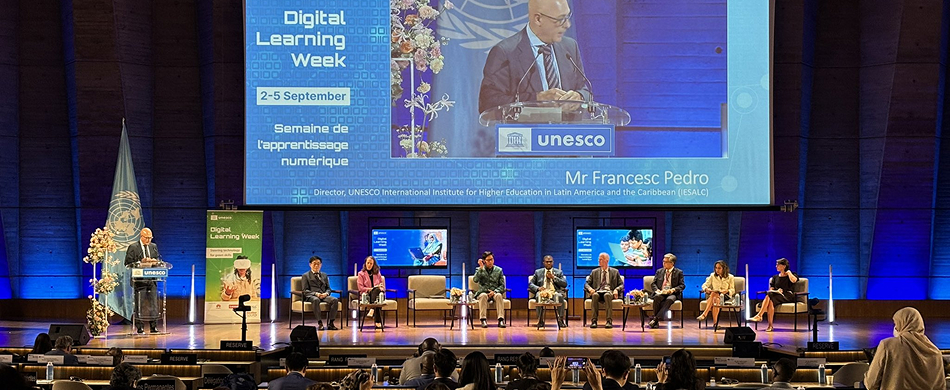
Notes from UNESCO “Digital Learning Week”
At the “UNESCO Digital Learning Week” held in Paris, Isabella Hau from Stanford Accelerator for Learning shared four priorities that will strengthen Human–AI collaboration:
Learning Together: Supporting creativity and deep learning.
Engaging Together: Strengthening human connections. Research shows that children’s brain activity is significantly higher when learning with a parent + ChatGPT compared to learning with ChatGPT alone. In other words, technology should not isolate; it should enhance connection.
Designing Together: Inclusive design with teachers, students, and society.
Validating Together: Building trust through critical thinking and collective verification.
Hau concluded her talk with the following sentence:
“The future of education will not be determined by the intelligence of machines, but by how we nurture our humanity.” This emphasis summarizes the essence of AI literacy: Artificial intelligence creates real value only when it nurtures human creativity, connections, and critical reasoning.
The Comfort–Growth Paradox
The convenience offered by artificial intelligence often carries the risk of trapping students in their comfort zone. Yet learning requires a certain level of challenge. Therefore, AI should not be used as a shortcut that does the work on behalf of the student, but rather as a guide that supports the learning process.
Advanced Cognitive Support
At this point, the Advanced Cognitive Scaffolding approach stands out by viewing AI not as a passive assistant, but as a dynamic learning guide:
- Gradual autonomy: Provides intensive support at first, then gradually withdraws.
- Adaptive personalization: Adjusts its support according to the learner’s needs.
- Cognitive load optimization: Directs mental energy not to unnecessary details, but to tasks with high learning value.
In this way, artificial intelligence becomes a companion that encourages independent thinking and problem-solving, rather than pushing students toward easy solutions.
Investing in People Alongside Technology
The critical truth that should not be forgotten is this: Investments in technology cannot create lasting transformation unless they are supported by investments in people. The most successful institutions invest not only in new technologies, but also in the competencies of teachers and students. This rule also applies to education: Without developing AI literacy, the opportunities offered by technology remain incomplete.
Conclusion: A Responsible and Inquisitive Culture
AI literacy is a critical culture that will shape the future of education. The core issue is to use technology responsibly in a way that supports learning and to make it a trusted partner in transformation. If, as teachers and administrators, we teach our students not only how to “use” artificial intelligence, but also how it works, where it can fail, and how it should be questioned, artificial intelligence will become a powerful component of a human-centered and sustainable future.









 Corporate
 Our History
 Message from Our Board of Directors
 Message from Our Executive Board
 Management
 Becoming a Member of İTK Family
 Our Mission
 İTK Values
 Accreditations
 Our Policies
 İTK Alumni Association
 Sustainability
 İTK Corporate Identity
 Career at İTK
 Schools
 Primary School
 Middle School
 High School
 Campuses
 Academic
 Foreign Languages Education
 Technology
 PDC
PDC Traditional İTK Activities
 Success
 İTK SSAC Academy
 Life at İTK
 Sports, Culture and Arts Centers
 Clubs
Clubs İTK School Parents Association
 İTK Student Association
 İTK Sports Club
 İTKStore
 İTK Podcast
 Registration
 New Semester Registration
 Required Documents
 Online Registration
 Individual Admission Exam
 ADS
ADS Medya
Medya News and Annoncements
 Events
 Corporate Publications
 Blog
Blog Contact